Monday, November 5, 2018

Kat West "10 Weird Facts About Lightning Strikes"

https://www.rd.com/culture/lightning-strikes/


One Fact: 


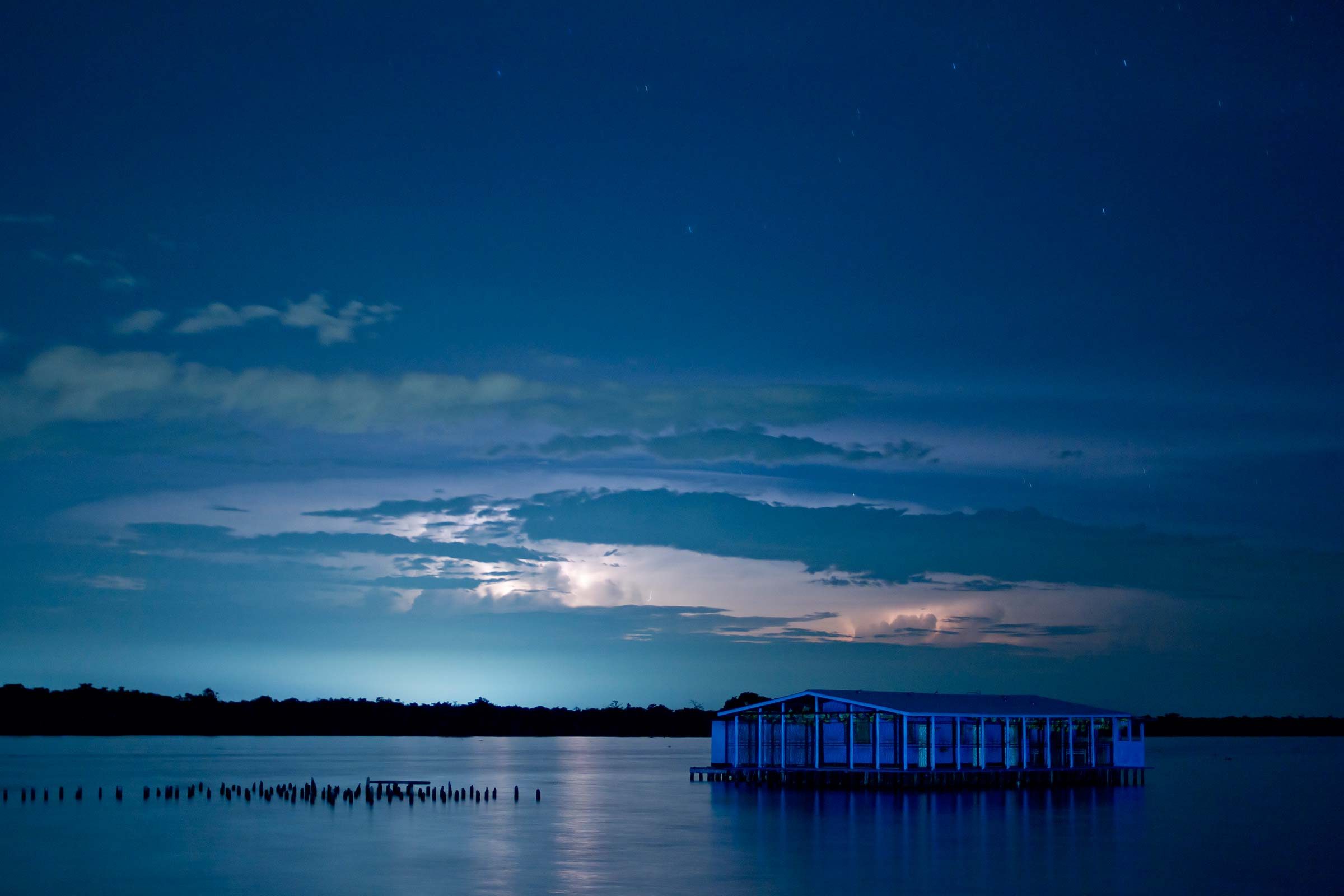
Bolts of light illuminate the sky above the intersection of the Catatumbo River and Lake Maracaibo in northwestern Venezuela more than 300 nights a year, often flashing several times a second. Warm trade winds from the Caribbean Sea mix with cool air descending from the Andes to create an unusual weather pattern that helped the area set a record for the world’s most lightning bolts per square kilometer last year. This is one of the lightning facts that hardly anyone knows. And these are unbelievable natural disasters in the United States that you had no clue happened.

Kat West "HAARP : man-made weather manipulation, earthquakes,etc"

https://inlightofrecentevents.wordpress.com/haarp-man-made-weather-manipulation-earthquakesetc/


Hoagland describes the dual heavy rain bands in Ophelia as taking on a “tuning fork” interference pattern that moves in lock step with the eye of the storm.
It is Hoagland’s contention “…based on the physics of these images that these bizarre ‘tuning fork’ patterns — note, geometrically aimed at the precise centers of these respective storms – are actually a “rainfall side-effect” of an unseen energy technology being applied to these respective storms … in an effort to decreaseboth their wind velocities, and to simultaneously alter the storms’ tracks themselves.”
As a Spectrum Engineer, I see some merit in this electro-magnetic “energy technology” explanation, but I believe Hoagland’s “rainfall side effect” may actually be the main desired effect, given that enough intense cold rain from above, on the storm, could act as a blanket on the storms fire and have the effect of the storm rapidly raining itself out. As I’m no meteorologist, this is mere speculation on my part.
But could this effect possibly be attained using electromagnetic waves? Consider that research indicates, and it’s not unlikely, certain frequencies of high intensity EM fields could have the ability to separate molecules or break up molecular compounds. This could be used for such things as say separating H2O from air allowing the water to fall. It seems this would be more plausible over open water than over land as water vapor levels and atmospheric conditions over large bodies of water would seem more conducive. – via Glenn Kreisberg at http://www.grahamhancock.com/forum/KreisbergG2.php
Furthermore, as many are starting to learn about, the HAARP facilities are a prime conspiratorial suspect in this potential disturbance in both seismic activity and hurricane intensity.  Perhaps in an attempt to divert the hurricane, it caused an unintended, unusual earthquake in the region?  Is it possibly due to the gas and oil firms fracturing the rock layers (fracking) in their efforts to find more resources?  The earthquake is highly unusual, in and of itself, but there exists no evidence that it is directly involved.  Merely speculation at this point.
I suppose we might never know, but I would be interested in seeing some of the microwave imagery of Hurricane Irene if it is available from the early hours of August 23rd, 2011, and look for any similar tuning-fork bands or rain sheers in geometric patterns. In a nutshell, this is the nucleus of the expertise required to control the weather and by some accounts – such as Defense Secretary William Cohen and Venezeulan President Hugo Chavez – create seismic activity or “earthquake weapons.”  By pouring measured energy that has been focused into certain parts of the ionosphere, scientists can create all kinds of storms, such as hurricanes, thunderstorms, floods, tornadoes and even drought.  China, Malayasia and Russia all openly admit to weather modification operations, including the creation of pinpoint hurricanes and heavy rainstorms.

Kat West "Scientists are finally linking extreme weather to climate change"

https://www.wired.co.uk/article/climate-change-weather-attribution


Now Otto is right at the heart of a growing scientific movement called extreme event attribution. Her aim? To be able to point to an extreme weather event and use climate modelling to say whether that same event would have been more or less likely to happen in a world where humans hadn’t caused global temperatures to rise by a whole degree over the last 120 years.
Up until a few years ago, it wasn’t possible to draw that link with any degree of accuracy, Otto says. But in 2004, Pete Stott at the UK Met Office published a paper in the scientific journal Natureshowing that climate change had at least doubled the risk of the 2003 European heatwave that killed tens of thousands of people. Twelve years later the Bulletin of the American Meteorological Society dedicated an entire issue to the new field of extreme event attribution. In the introduction, its editors argued that it was now possible to detect the effects of climate change on some events with high confidence. “That was really the first time we could say that we can attribute events to anthropogenic climate change,” Otto says.
In late 2014, Otto helped set up the World Weather Attribution(WWA) initiative – a collaboration between the ECI, the Netherlands-based Red Cross Red Crescent Climate Centre and Royal Netherlands Meteorological Institute. The aim of the project wasn’t just to draw a link between extreme events and climate change, but to provide this analysis in real-time so they’d have answers while the extreme weather event was actually happening.

Kat West "Pokémon Go Weather effects system benefits and boosts explained to help you get Cacnea and Lotad"

https://www.eurogamer.net/articles/2018-02-23-pokemon-go-weather-effects-cacnea-lotad-4819


Pokémon Go Weather effects add something new to consider when going out to look for Pokémon in the wild.
Whether it's raining, sunny or just plain cloudy, different Pokémon will appear based on your local weather, and give boosts to certain Types related to how it's looking outside - so expect Fire Types to be that little bit stronger when the sun is out.
Released alongside the December 2017 Gen 3 update, though we don't know the full extent of how weather changes every spawn, we have a good idea of the many benefits it will bring.

What are Pokémon Go Weather effects?
For the first time in the game, as well as your geographical surroundings (such as bodies of water) affecting the types of creatures that spawn, the local weather will change what creatures you see and how they behave.
Weather effects will impact the game in four ways:
  • New visual effects
  • Seeing different Pokémon Types spawn
  • Increasing the level (CP) of spawning creatures both in the wild and in Raids
  • Certain Types will be more effective in battle (by around 20%)
  • Increases to Stardust when catching certain Types by 25 percent
There are numerous weather effects. First indications show that it does make certain creatures become far more common - or rarer - and though there doesn't appear to be any weather exclusive spawns, long term it could have interesting dynamics on the game's meta based on creatures that are more popular based on climate, through to how powerful they are during certain seasons.

Kat West "A Melting Arctic And Weird Weather: The Plot Thickens"

https://www.iflscience.com/environment/melting-arctic-and-weird-weather-plot-thickens/


Everyone loves to talk about the weather, and this winter Mother Nature has served up a feast to chew on. Few parts of the US have been spared her wrath.
Severe drought and abnormally warm conditions continue in the west, with the first-ever rain-free Januaryin San Francisco; bitter cold hangs tough over the upper Midwest and Northeast; and New England is being buried by a seemingly endless string of snowy nor’easters.
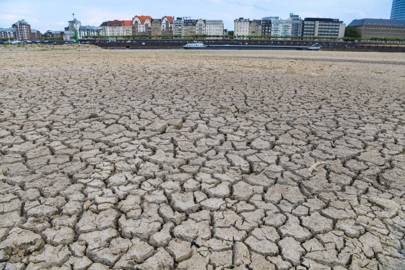
Yes, droughts, cold and snowstorms have happened before, but the persistence of this pattern over North America is starting to raise eyebrows. Is climate change at work here?
Wavier jet stream
One thing we do know is that the polar jet stream – a fast river of wind up where jets fly that circumnavigates the northern hemisphere – has been doing some odd things in recent years.
Rather than circling in a relatively straight path, the jet stream has meandered more in north-south waves. In the west, it’s been bulging northward, arguably since December 2013 – a pattern dubbed the “Ridiculously Resilient Ridge” by meteorologists. In the east, we’ve seen its southern-dipping counterpart, which I call the “Terribly Tenacious Trough.”

Kat West "Chicago-area steel company collecting donations for hurricane relief"

https://wgntv.com/2018/10/13/chicago-area-steel-company-collecting-donations-for-hurricane-relief/


CHICAGO HEIGHTS — A steel company in suburban Chicago Heights is sending help to those impacted by Hurricane Michael.
Esmark Steel on Saturday collected donations at its plant at 2500 Euclid Ave. The company is accepting donations through the beginning of next week.
Requested items include water bottles, solar phone chargers, sleeping bags, clothing, generators, batteries, blankets, baby wipes, toothbrushes and non-perishable food items.
Everything will be loaded into a 20-ton truck to be driven down to those in need.
“It’s devastating to the people,” Jeff Eggert of Esmark said, “and we know it’s important to get the supplies in to them as soon as we can.”
Donations can be brought to the Esmark Steel parking lot at 2500 Euclid Ave. in Chicago Heights.

Kat West "Natural disasters an increasing reality"

https://www.sfchronicle.com/bayarea/article/Natural-disasters-an-increasing-reality-13261537.php


California has counted nearly 300 disaster declarations since the federal government began using the designation in 1953. That’s more than any other state.
Fires, floods and earthquakes top the disaster list. But freezes, punishing storms and even a hurricane have drawn the attention of Washington and its all-too-familiar legions of relief workers.
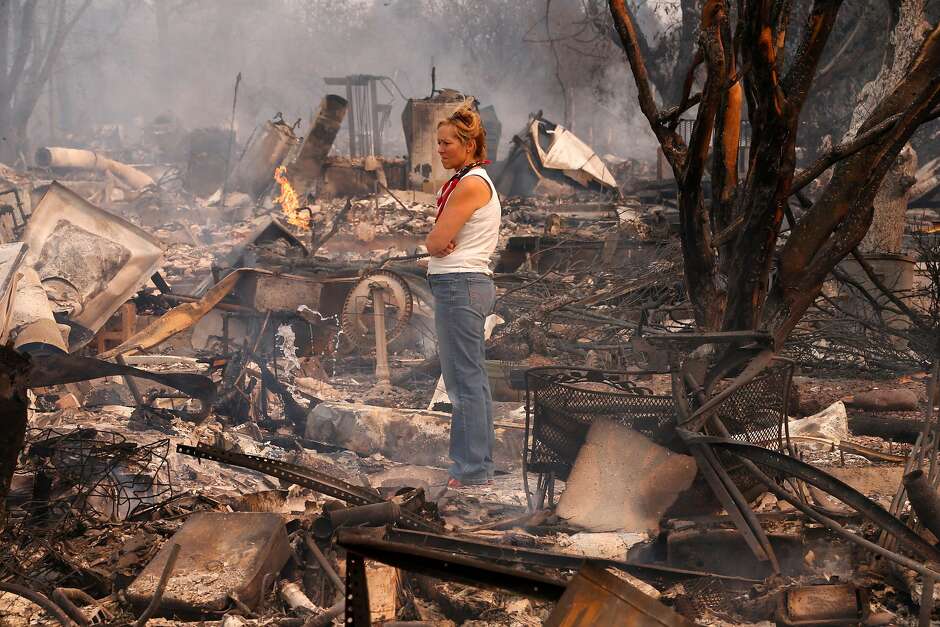
In recent decades, the number of natural disasters in California has only increased, and scientists say a warming climate is likely to give rise to yet more weather extremes with the potential for greater havoc. The deadly wildfires over the past couple of years, from Wine Country to Redding to Yosemite, may be just the start.