Showing posts with label Devin McGowan. Show all posts

Monday, April 6, 2015

Super Typhoon Expected to Weaken

A super typhoon blamed for the deaths of at least four people on islands in the western Pacific Ocean has moved into the open sea and is expected to significantly weaken before reaching the Philippines later this weekend. Paul Stanko of the National Weather Service said super Typhoon Maysak packed winds of 160 kilometers per hour (100 mph) when it passed north of the Yap State atolls of Ulithi and Fais in the Federated States of Micronesia early Wednesday. There have been no reports of casualties in Yap.

Wilfred Robert, the chief of staff for the Chuuk State governor, and member of the Chuuk Emergency Coordinating Central Committee, said four deaths, a child and three adults, were reported as casualties of Maysak. "Many breadfruit and mango trees were down, fallen," Robert said. "Even taro patches, which are the main source of food, is in danger. "People in remote villages and neighboring islands will need food."Robert predicted that food could run out by Friday for many islanders in the lagoon islands.
 
The typhoon, which was upgraded to a super typhoon Tuesday afternoon when it passed Yap, moved into the open sea and is headed toward the Philippines.
 
In Manila, the weather bureau reported that Maysak's sustained winds weakened Wednesday from 215 kph (134 mph) to 190 kph (118 mph) and could still weaken as it approaches the country's eastern coast. The typhoon, currently with gusts of nearly 140 mph was still 1,165 kilometers (723 miles) away from the eastern Philippines and may still be dangerously powerful when it hits land, likely on Saturday or Sunday if it doesn't change course, Filipino forecasters said.
 

Sunday, April 5, 2015

Arctic Climate Threat


What is Permafrost? Permafrost is ground that stays frozen all year. According to the International Permafrost Association, Permafrost covers 24 percent of the surface of the northern hemisphere. As the arctic warms more Permafrost is thawing. 

Rapid Arctic warming is expected to lead to the thawing of permafrost. This is problematic because as it thaws it will begin to emit carbon dioxide and methane to the atmosphere. And if this occurs in the amounts that some scientists are predicting, it could significantly undermine efforts to reduce the world’s greenhouse gas emissions.

There may be more than twice as much carbon contained in northern permafrost as there is in the atmosphere itself. According to Woods Hole Research Center senior scientist, Robert Max Holmes, “It’s built up over thousands and thousands of years. It’s all stored away in a freezer, and as we’re warming the Earth, and warming the Arctic, it’s starting to thaw.”

More global warming could cause more thawing of Arctic permafrost, leading to more emissions of carbon into the atmosphere, leading to more warming and more thawing of Arctic permafrost.


Flash Flooding in Louisville

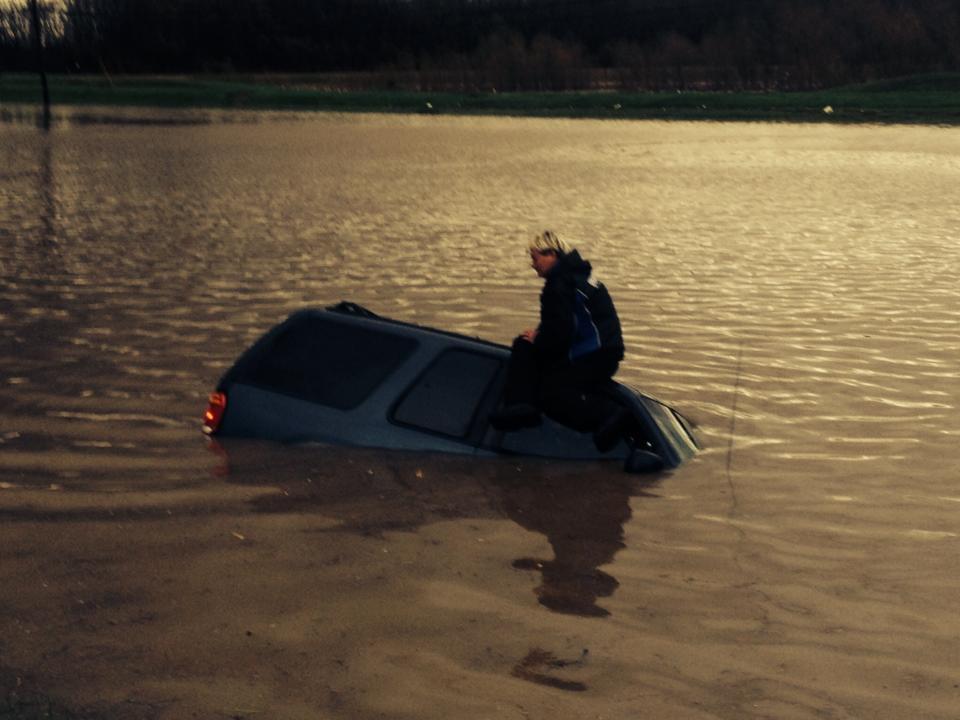
Torrential rain overnight Thursday triggered major flash flooding in Louisville, Kentucky, closing roads and prompting more than 100 water rescues. According to Metrosafe, the official Louisville Emergency Management Agency, 116 water rescues were performed throughout Jefferson County since 1 a.m. CST Friday.

Submerged cars and buses had nowhere to go with the widespread water. Heavy rainfall continued to cause problems in eastern parts of the state into Friday, leaving at least one person dead.

Louisville has picked up over 13 inches of precipitation (rain/melted snow) since March 1, which is almost 9 inches wetter than average.

 View image on Twitter