Showing posts with label Juanairis Castaneda. Show all posts

Monday, October 29, 2018

ATMOSPHERIC SCIENTISTS TO WEATHER THE STORMIEST PLACE ON EARTH

ATMOSPHERIC SCIENTISTS TO WEATHER THE STORMIEST PLACE ON EARTH

relampago csu team

In 2006, Kristen Rasmussen read a paper titled, “Where are the most intense thunderstorms on Earth?” – and she was hooked.
The answer was a sparse region in Argentina’s Andean foothills. Rasmussen, then a University of Washington graduate student, flung herself into studying the monstrous storms that darken subtropical South American skies: their structure, their genesis, and why they occur there, and not elsewhere.
Now a Colorado State University assistant professor in the Department of Atmospheric Science, Rasmussen will finally get to stand under those very skies, putting her hypotheses to the test.
Rasmussen is a key contributor to a $30 million, National Science Foundation-funded field campaign, launching Nov. 1, aimed at discovering why thunderstorms in this particular region of Argentina are among the most extreme in the world. The scientists will help improve the knowledge and prediction of violent storms in this part of the world, as well as for severe weather in general.

US Sends Aid to Pacific Islands Devastated by Huge Typhoon

US Sends Aid to Pacific Islands Devastated by Huge Typhoon

US Sends Aid to Pacific Islands Devastated by Huge Typhoon

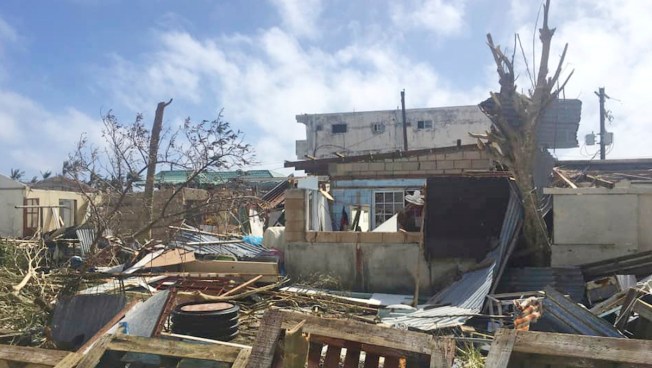
The federal government sent supplies to a U.S. territory in the Pacific that was ravaged by a super typhoon as residents of the Northern Mariana Islands dug through crumbled houses, smashed cars and fallen utility poles two days after the deadly storm.
Military planes brought in food, water, tarps and other supplies, U.S. Federal Emergency Management Agency spokesman David Gervino said. The agency is focused on helping restore power, opening sea and airports, and ensuring cell towers can operate on emergency power until electricity returns, he said.

Thunderstorm Study in Argentina Aims to Improve Severe Storm Forecasts

Thunderstorm Study in Argentina Aims to Improve Severe Storm Forecasts


It’s spring in the Pampas — the time of year when vast, intense thunderstorms roil across the region, which extends from the foothills of the Andes Mountains in Argentina to the coasts of Brazil and Uruguay.
Next month, more than 150 scientists, including staff from the National Center for Atmospheric Research (NCAR), will head to Argentina as part of a field campaign to discover why these thunderstorms may be the most intense on Earth. The research project, funded by the National Science Foundation (NSF), aims to improve the prediction of severe storms.
Like the springtime storms that form on the U.S. Great Plains, the storms in the Pampas bring a variety of severe weather, including hail, damaging winds, torrential rains, and deadly tornadoes with catastrophic impacts. But the thunderstorms in the Southern Hemisphere are larger, have more lightning, and may produce more frequent large hail and flooding than their Northern Hemisphere counterparts.

SEVERE WEATHER | SUPER TYPHOON YUTU THREATENS PHILIPPINES WITH DEADLY WINDS, SURF

SEVERE WEATHER | SUPER TYPHOON YUTU THREATENS PHILIPPINES WITH DEADLY WINDS, SURF


Super Typhoon Yutu could rip into eastern Luzon in the Philippines tomorrow, extending the toll of destruction it left in the U.S. Northern Mariana Islands earlier this week.
According to information posted yesterday by the Hong Kong Observatory, Yutu will move towards Luzon in the next couple of days. The chance for it to enter the South China Sea is relatively high on Wednesday, the subsequent track and the weakening of Yutu will depend on its interaction with the replenishment of the monsoon.
Yutu, called Rosita in the Philippines, will bring flooding rain, tree-snapping winds and a life-threatening storm surge when it comes ashore. Luzon is the largest and most populous island in the Philippines, home to some 53 million people.
On its current track the storm would pass well north of the capital of Manila, which could see rain and gusty winds.
Yutu became the strongest storm since 1950 to hit the U.S. territories of Saipan and Tinian in the Northern Mariana Islands, when it brought winds of nearly 180 mph over the area on Wednesday. At least one person died, many were injured and buildings were destroyed or damaged, according to a blog post by meteorologist Bob Henson of Weather Underground, an IBM company.

Severe storms unload knee-deep hail in Rome

Severe storms unload knee-deep hail in Rome


The hailstorm followed unseasonably mild weather in Rome. High temperatures had been in the mid- to upper 70s for the prior week, compared with the average of about 70.
After the storm, highs on Monday were only in the low 60s.
The culprit for the event was a cold front and an associated vigorous high-altitude disturbance that dropped in from the northeast, shown in the animation below:

An intense high-altitude disturbance or vorticity maximum passed through Italy on Sunday from northeast to southwest. (PivotalWeather.com)

Experts predict more severe weather in coming years

Experts predict more severe weather in coming years


It might be time to start naming all the Lakewalk-destroying storms like the one Duluth suffered Wednesday, as experts say they're likely to increase frequency in the future.
Already in the past 20 years it has been markedly wetter and windier in St. Louis County, according to the National Oceanic and Atmospheric Administration's storm event database. The increasing intensity and frequency of severe weather is a trend expected to continue as the climate changes.
"There is this trend toward the climate getting warmer and also getting wetter in Minnesota, in St. Louis County," said Kenny Blumenfeld, senior climatologist with the state Department of Natural Resources Climatology Office. "Over the long-term, rare events are becoming slightly less rare. ... Some of these storms have a tendency to be bigger than they were historically, and the precipitation increases are manifest in both summer and winter."

Governor Abbott issued statewide disaster declaration due to severe weather, flooding

Governor Abbott issued statewide disaster declaration due to severe weather, flooding


The 18 counties included in the disaster declaration are Bastrop, Burnet, Colorado, Fayette, Hood, Jim Wells, Kerr, Kimble, La Salle, Live Oak, Llano, Mason, McMullen, Nueces, Real, San Patricio, Travis, and Williamson.
"Texas is taking immediate action to respond to the threat of recent severe weather and flooding across the state,” Abbott said. “We have made available all necessary resources to respond as quickly and effectively as possible to this disaster, and to assist those in harm’s way. I thank all our first responders and local officials on the ground in these communities for their efforts to assist fellow Texans during this dangerous event.”

How severe weather impacts those in SC struggling with mental health

How severe weather impacts those in SC struggling with mental health

Tropical Weather North Carolina (copy)
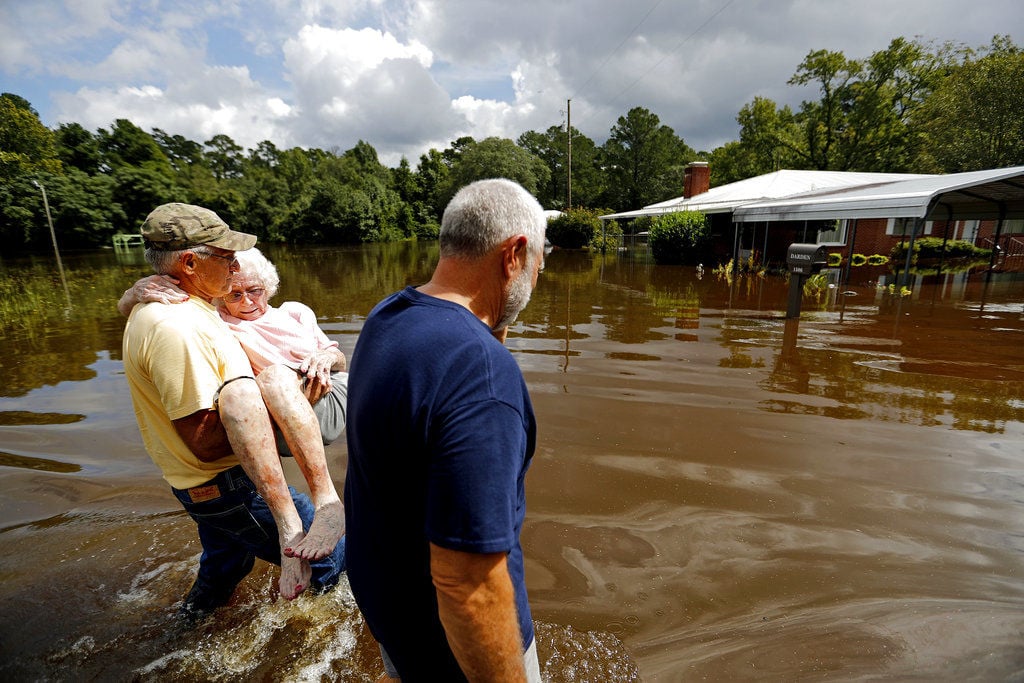
When severe weather strikes and residents are advised to seek shelter either out of state or at a local evacuation shelter, some of those evacuees will undoubtedly include people battling mental health issues. For some, being confined to a crowded shelter is enough to be triggering. For others, the storm itself is stressful.
Right now, many areas across South Carolina are still dealing with property damage inflicted earlier this hurricane season. But when it comes to mental health issues caused by storms, the unseen damage may take much longer to clean up. 
The S.C. Department of Mental Health recently received a $415,000 grant to address immediate mental health concerns in the state following the recent flooding and severe weather. The grant, provided from a partnership between the Federal Emergency Management Agency and the Substance Abuse and Mental Health Services Administration, will support a 60-90 day crisis counseling program catered toward the assessment of trauma after disasters.


Texas Saw A Decrease In Severe Weather In 2018, Despite Heavy Rains And Flooding

Texas Saw A Decrease In Severe Weather In 2018, Despite Heavy Rains And Flooding

As the winter season draws nearer, many Texans have noticed the sudden rain, flooding and chilly weather that's hit our state. Ironically, there were fewer severe-weather events in Texas this year – something that Texas A&M University's newspaper, The Battallion, captured in a recent headline.
Texas A&M atmospheric sciences professor and State Climatologist John Nielsen-Gammon confirms that it's true: This year, the number of tornadoes and hurricanes in Texas has fallen well below the average.

Tuesday, September 4, 2018

Labor Day rainfall sets record, with little relief in sight

The Chicago area had the wettest Labor Day since at least 1912, and there’s little relief in sight from the rain, according to the National Weather Service.

During a 24-hour period, a record 1.79 inches of rainfall was recorded at O’Hare International Airport, and flooding on Interstate 190 jammed up traffic in that area, according to the weather service. Previously, the wettest Labor Day in Chicago was in 1912 when 1.49 inches of rain was recorded.
On Tuesday evening, weather crews surveying damage from Monday’s storms determined that a “weak tornado” moved across portions of the city’s West Side on Monday afternoon, just after 2 p.m. Winds hit an estimated peak speed of 75 mph and caused minor tree damage, according to the weather service.


http://www.chicagotribune.com/news/ct-met-weather-rain-labor-day-20180904-story.html


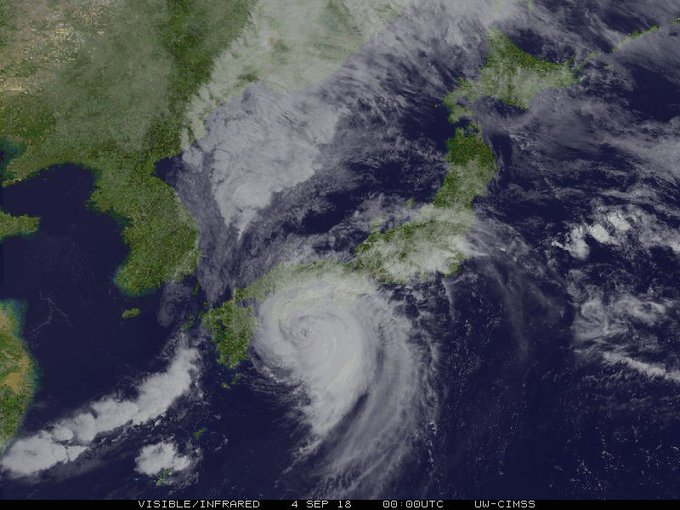
Jebi sweeping through Japan as a life-threatening typhoon


Typhoon Jebi will continue to threaten lives and property as it sweeps through Japan into Wednesday.
Jebi made landfall in eastern Shikoku around midday Tuesday, local time, with the equivalent strength to that of a Category 3 hurricane. The storm then crossed through southern and central Honshu. 

Nearly one million people were put under evacuation advisories as the typhoon approached, according to Reuters.
https://www.accuweather.com/en/weather-news/typhoon-jebi-to-deal-japan-another-dangerous-blow/70005948