https://theextinctionprotocol.wordpress.com/2015/04/12/warm-blob-in-pacific-ocean-linked-to-weird-weather-across-the-u-s/ A mysterious “warm blob” in the Pacific Ocean could be the reason why US West coast states like California are experiencing their worst ever drought, a new study says. The blob in the ocean was discovered last year, with temperatures one to four degrees Celsius (two to seven degrees Fahrenheit) above surrounding ‘normal’ water, causing havoc to West Coast marine ecosystem and led species to seek refuge elsewhere. The blob extends about 1,000 miles (1,600 kilometers) offshore, from Mexico up to Alaska, and was 300 feet (90 meters) deep.
A study by the University of Washington found that a high-pressure ridge could be causing the blob, by trapping heat in the water. Dr. Nick Bond, a climate scientist at the University of Washington, coined the term ‘the blob’ in June. Researchers said it may have contributed to the state of Washington’s mild 2014 winter and might signal a warmer summer. It is still unclear how this area of warmer water has formed, or how long it will stay. One thing scientists can be studied is its effects. As air passes over warmer water and reaches the coast it brings more heat and less snow, which the scientists say helped cause current drought conditions in California, Oregon and Washington. Bond says all the models point to it continuing through the end of this year.
http://www.occupydemocrats.com/its-growing-wisconsin-becomes-second-state-to-ban-discussing-the-words-climate-change/ It appears that Wisconsin is following in the footsteps of Florida. The state has become the second to ban the phrase 'climate change'. Attempts to research and find solutions to problems that climate change brings are also being squandered. Research concerning these matters 'wastes time' according to state legislators. Such an Orwellian effort to control not only the work but also the language of government employees is especially inappropriate in a board whose jurisdiction is the land that will increasingly feel the effects of global warming in the decades to come. A recent report published by the University of Wisconsin outlined the likely effects on the state, including drought, heat waves, severe storms, and degradation of the state’s plant and animal life. In a state where polls suggest more than 70% of residents understand that climate change is happening and 60% believe the government should increase environmental regulations to prevent it, the government is doing its best to squash all talk of this issue that will affect us and our communities for generations to come. In Wisconsin, and indeed in much of the country, the blind are leading the sighted.
These are some amazing phenomena you can only see during the spring months, from the blooming of flowers to great animal migrations.
1. Cherry Blossoms, Japan
Cherry blossoms, or sakura, bloom across Japan between late March through early April. Millions of locals and international tourists turn out each year to admire these beautiful light pink and white flowers. The blooms begin in Okinawa and peak in Kyoto and Tokyo.
2. Gray Whale Migration, Pacific Coast of the United States
Central America is one of the best places to go surfing in Spring. The season marks the arrival of the first south swells of the year, reports The Surf Channel, and even slight southern swells can produce incredible surf that can be enjoyed in such places as El Salvador, Panama and Costa Rica.
5. Baby Wild Animals, Yellowstone National Park
Spring is a great time for wildlife viewing in Yellowstone National Park because visitors have a greater chance of spotting a range of new baby animals, including black bear cubs, bighorn lambs (usually born in May), elk and bison calves, baby pronghorn antelope or gray wolf cubs.
The best time of year to see Yosemite National Park's waterfalls is in spring, when most of the snowmelt occurs and the waterfalls are the most impressive. Peak runoff is typically in May or June, according to the National Park Service. Some waterfalls, including Yosemite Falls, are only a trickle (or are compltely dry) by August.
8. Spring Butterfly Migration, Mexico and the United States
Of course, the arrival of spring is most famously marked by the blooming of wildflowers across the country from deserts to mountainscapes. Just 40 miles from Phoenix, the Superstition Mountains burst into color with multitudes of wild Mexican poppies and Lupine bloom each year. Meanwhile, Antelope Valley California Poppy Reserve in the Mojave Desert is home to one of the largest and most dependable bloom of orange California poppies, according to Smithsonian Magazine. Central and southern Texas is an ideal place to see fields blooming with bluebonnets, Texas’ state flower, and from April 1-30, 2015, Ennis showcases over 40 miles of mapped driving Bluebonnet Trails, the oldest such trails known in the state. Thousands of visitors make the short trek to Ennis to view the wildflower show. In late April, Tennessee's Great Smoky Mountain National Park also blooms with over 1,500 wildflower varieties, making the park a world-renowned hotspot for wildflower pilgrimages.
What is currently going on in the atmosphere is one of the best indicators of what is going to happen in the next few hours, or perhaps an indication of what has just occurred. Undulatas asperatus clouds From the American Meteorological Society Glossary, the definition of Undulatas is: A cloud variety composed of merged or separate elements that are elongated and parallel, either suggestive of ocean waves or arranged in ranks and files. In simpler terms, they are caused by buoyancy in the atmosphere and when there is a cloud deck already in place, gravity and buoyancy create waves in the clouds. It creates an illusion of being underwater, looking up at waves breaking overhead, while in reality you are looking up at a very fluid atmosphere.
Mammatus clouds are a rare example of clouds forming in areas of sinking air and can last a long time if the area of sinking air contains large drops and snow crystals. This is because larger particles require greater amounts of energy for evaporation to occur. Evaporation inside the area of sinking air causes pockets of negative buoyancy and this is what forms the sac-like cloud formation.
We’re about to experience a “double El Niño” — a rare weather phenomenon that climatologists had warned about several months ago. That means two consecutive years of the concentration of warm water in the Pacific Ocean that brings West Coast storms, quiet hurricane seasons in the Atlantic and busy ones in the Pacific. The danger is that this could mean more than a few months of odd weather, but instead usher in a new phase of climate change. Last year was the warmest year on record; 2015 looks set to be even warmer. “One way of thinking about global warming from the human influences is that it’s not just a gradual increase, but perhaps it’s more like a staircase, and we’re about to go up an extra step to a new level,” says climate scientist Kevin Trenberth of the National Center for Atmospheric Research.
Normally, the warm water from an El Niño spreads across the Pacific and cools as it evaporates. The increased moisture in the air leads to thunderstorms and tropical storms. That hasn’t happened as much as anticipated over the last year. “The moisture in the atmosphere triggers a lot of thunderstorms and tropical storms, but in general that atmospheric connection has not been anything like as strong as we normally expect in El Niño events, and as a result, the warm water is sort of sitting there, and it hasn’t petered out,” Trenberth explains. “The energy has not been taken out of the ocean, and there’s a mini global warming, so to speak, associated with that.” What kind of temperature increase are we talking about? Trenberth says it could mean a rise of two- or three-tenths-of-a-degree Celsius, or up to half a degree Fahrenheit. The change could occur “relatively abruptly,” but then stick around for five or 10 years. While those numbers may seem small, in the context of global climate, a shift of that magnitude could have devastating consequences.
From the Extinction Protocol website April 6th 2015 - the Philippine Atmospheric, Geophysical and Astronomical Services Administration (Pagasa) is monitoring another weather disturbance which could further intensify into a typhoon. As of Monday morning, forecast tracks showed that tropical storm “Haishen” remains almost stationary over Pacific Ocean near Micronesia. The Japan Meteorological Agency said the storm has maximum sustained winds of more than 60 kilometers per hour and gustiness of up to 90 kilometers per hour. Glaiza Escullar, weather forecaster of Pagasa, said Haishen may further intensify and become the fourth storm from the Pacific Ocean to reach typhoon category this year. Escullar said Haishen remains too far from the country and still has a low chance of entering the Philippine Area of Responsibility (PAR), but its track may still change depending on the movement of the North Pacific High Pressure System or the high pressure area near Japan. Should Haishen changes track and enters PAR, it will be named “Dodong” — the country’s fourth storm in 2015.
This year's spring thaw sent the Ohio River to its highest levels in nearly two decades after torrential rains and melting snow soaked the valley. Last week, the river crested at 57.7 feet, a level unseen since 1997, which led to five homes flooding in New Richmond, which sits along the north bank of the river in southeast Ohio. In the Northeast, where several states remain layered in snow, similar flooding could occur if spring's rising temperatures melt the snowpack quickly.
Florida doesn't “believe human activity is causing these dramatic changes to our climate.” This is Florida, the state of former governor and Republican presidential contender Jeb Bush, who in 2009 called himself a global warming “skeptic.” And this is Florida, the state of Republican Gov. Rick Scott, who has punted on the issue. “Well, I’m not a scientist,” he told the Miami Herald’s Marc Caputo last year when asked if he was becoming less skeptical of man-made climate change.
According to a Sunday report from the Florida Center for Investigative Reporting, Scott’s aversion to discussions of man-made climate change has been brought to bear on a department charged with protecting a state that already exhibits many of the changes scientists predict will overtake other coastal regions. Officials with the Florida Department of Environmental Protection (DEP), as reported by writer Tristram Korten, have been restricted from using the term “climate change” or “global warming” in official correspondence.
More than 98 inches of snow has fallen in Boston this season, while workers have spent about 170,000 hours plowing the streets and distributed more than 76,000 tons of salt on roadways. At the same time, much of the American West, Rocky Mountains, and Northern and Central Plains have experienced warmer-than-average temperatures. California, in the grip of an epic drought, had its fourth-driest January ever recorded with just 15 percent of average precipitation.
So what is going on with this extreme weather, and what does it have to do with global climate change?
Due to recent analytical advancements, climate scientists are now able to more accurately determine how climate change impacts the odds of an individual extreme event occurring.
More research is planned in coming years to examine links between extreme weather and climate events and climate change, and global research already tells us a lot about the trends, including these three counterintuitive connections between climate change and extreme events:
1. Record cold temperatures can still occur in a warming world.
During 2014, cities in regions like the Midwest and Northeast endured record cold months. Zoom out to the state level, however, and three states (California, Nevada and Arizona) saw record warm annual temperatures in 2014, while none experienced record cold annual temperatures. The national average temperature was warmer than normal, and at the global scale, last year was more than just above average—2014 was the warmest year ever recorded.
While portions of the eastern United States have faced historic snow totals and frigid temperatures this year, the opposite can be said for much of the western U.S.
A growing body of research suggests that a contributing factor of this drastic east-west temperature contrast could be the accelerated warming taking place in the Arctic, which can have a weakening effect on the polar jet stream, a west-to-east river of wind in the atmosphere where cold Arctic air meets milder subtropical air in the mid-latitudes (e.g., the U.S.) of the Northern Hemisphere. A weaker polar jet stream creates more favorable conditions for a “wavy” north-south oriented path around the Arctic, which can increase the frequency of phases where Arctic air seeps south into regions like the eastern United States while warmer air protrudes north in the western half of the country.
2. A warming planet can make some regions much snowier.
The warmer the air is, the more water vapor it can hold. This additional moisture can bring more intense rain or snowfall. In addition, when sea surface temperatures are warmer than average (as they are currently in the Northeast Atlantic Ocean), the atmosphere becomes fueled with more moisture and energy.
Precipitation amounts vary by region, but in the United States, all regions except Hawaii have experienced an increase in very heavy precipitation events since the late 1950s. However, snowfall has decreased in most parts of the country since recordkeeping began, in large part because more winter precipitation has come from rain instead of snow. Thus, temperatures play a significant role.
Gradual warming is reducing the number of very cold days in many regions, but when temperatures are cold enough, the increased moisture can cause heavier snowfall events. In fact, the heaviest snowstorms occur when temperatures are just below freezing as opposed to when they are much colder (when available moisture is reduced)—conditions becoming more likely in mid-winter in a warmer world.
3. Climate change can contribute to a double whammy of drought and extreme precipitation in the same location.
As mentioned above, a warmer atmosphere can hold more water, fueling more intense rain and snow events. But at the other end of the spectrum, the warming climate can amplify conditions conducive to drought—like heatwaves, evapotranspiration and reduced soil moisture. The combination of these two extremes in one location can increase disasters like flooding and landslides, and recent history suggests parts of the United States may already be grappling with these double-whammy impacts.
Since 2010, regions like the Midwest have been impacted by numerous extreme drought and flooding events that have each exceeded $1 billion in losses. Right now, California is in the midst of a drought that researchers have found to be its worst in at least 1,200 years. And while not found to have been caused by climate change, scientists have determined the drought has been driven by record warm temperatures and reduced precipitation. These prolonged warm and dry conditions were then met with an incredible deluge of rainfall in some areas of the state last December (San Francisco received more rain in a matter of days than it did all of 2013) causing flooding and mudslides, washing out roads and damaging homes.
A Need for Action
A growing body of evidence shows strong connections between climate change and extreme events, and impacts once thought of as a distant future threat are already occurring and widespread.
As decision-makers scramble to keep trains and buses running among feet of snow, make plans to save infrastructure from flooding, and revise planning to contend with drought, it’s time they pause to acknowledge the role that human-induced climate change is playing in our changing weather—and commit to ambitious policy changes that reverse these trends.
"When an extreme weather event happens, the public wants to know—is this climate change?" That statement by Lawrence Berkeley Lab's Michael Wehner provided a good background for the session on climate change and unusual weather events that happened at the meeting of the American Association for the Advancement of Science. The fact is, scientists aren't well equipped to answer that question—at least not in a way the public's likely to find satisfying.
Instead, Wehner said, science is on solid ground when it examines weather events in terms of probabilities: is the risk of a given event higher? Will the magnitude of a given type of event change?
Wehner went through some historic events and examined how climate change shifted these probabilities. For example, events similar to Europe's 2003 heat wave (which saw 70,000 deaths) are already twice as likely to occur given the amount we've warmed over pre-industrial conditions. If we allow the globe to warm by 2°C over preindustrial levels, that probability goes up to 154 times. "By the end of the century," Wehner said, "when we're likely to see 4°C warming, this event will likely seem cold."
Similar things were possible to say about the 2010 Russian heatwave (2-3 times more likely now, 5-8 times more likely at 2°C of warming) and the 2011 Texas drought (slightly elevated probability now, but up to 10 times more likely at 2°C). None of this is to say that climate change has caused any of these events; they occasionally appear in climate model runs without any added greenhouse gasses. It simply tilts the odds in their favor.
And these are events where the probabilities are relatively simple. Wehner said that, in a 2°C warmer world, climate models indicate we'll see an 18 percent drop in the total number of hurricanes that form, but the number of Category 4 and 5 storms will go up by 17 percent.
This sort of complexit statistical change was also seen by NOAA's Harold Brooks, who studies severe thunderstorms and tornadoes (winds above 50 knots and hail of an inch or more define these storms). As recently as the IPCC's 5th Assessment Report, Brooks said there was little to be said about this sort of extreme weather, but papers have started to come out since that are changing that.
In a number of cities, the frequency of precipitation has been unchanged even as temperatures rise, but the number of days with heavy rains is going up. In Oklahoma city, for example, the chance of a rainstorm exceeding an inch of rain has gone from 10-15 percent 20 years ago to over 25 percent now. Similar things have happened with tornadoes. Although there's no overall trend in these events, they're now coming in bunches; the records for months with both the most and fewest tornadoes have all been set recently.
Looked at another way, the number of days with tornadoes has dropped from about 150 to 100, but days with more than 30 have gone from essentially zero to to 60. The timing of tornado season is also off. The peak of the season has shifted two weeks earlier over the last 40 years, and four of the five earliest and latest starts to the season are all within the last 17 years. Overall, Brooks painted a picture where things are changing, but not in any obvious direction. And besides, as he put it, "If I get my house destroyed in a tornado, does it matter to me if there was only one that day?"
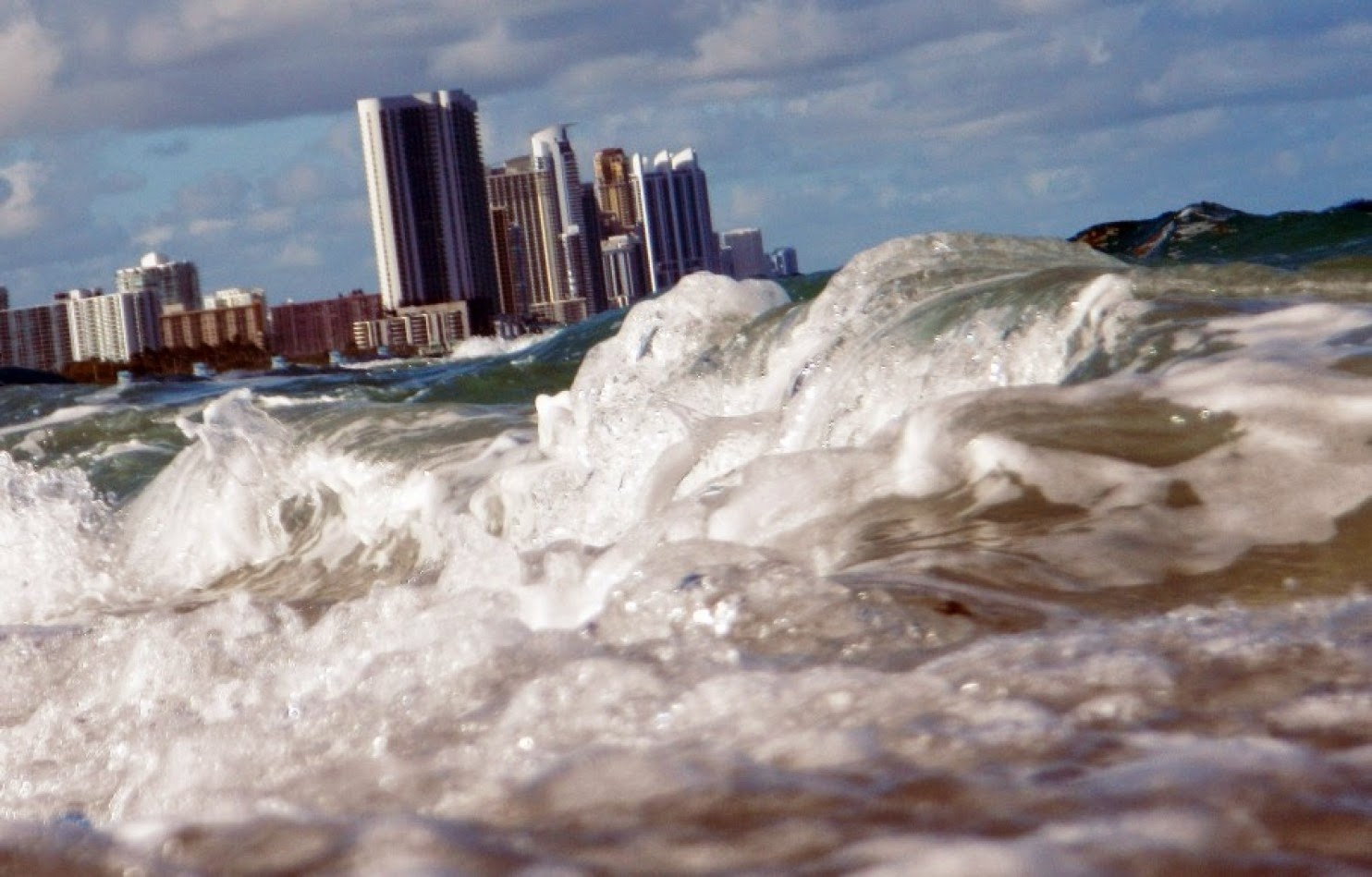
Claudia Tebaldi of UCAR managed to cover the one area where things aren't really subject to such complications: sea level rise. By 2050, Tebaldi said, the oceans will clearly be higher, providing every storm with an elevated launching pad to cause flooding. In the Battery of New York City, for example, this will mean a 100-year flooding event will come along every 15 years. And she performed a similar analysis for the entire US coast, where flooding can range from one meter up to four or five in areas on the common hurricane pathways.
In some places, she said, a 100-year flood will remain rare, but in others it will become an annual event. (The results of her analysis are posted on Climate Central). Most striking were the results from Florida, where most of the southern portion of the state will end up under water every other year.
The session was also notable for what was a rather public dispute between the organizer Michael Mann (of hockey stick fame) and Wehner, who disagree over the influence of climate change on California's recent drought. Wehner said "I don't like to make attribution statements based on statistics alone" (though he added "though I do love statistics" with a chuckle), while Mann argues that the high temperatures driven by climate change has helped deplete the state of groundwater. Still, Mann highlighted the disagreement as a case of a real scientific controversy, as opposed to the the manufactured sorts that the public often gets exposed to.
But Wehner wasn't adverse to making concrete statements. He noted that, if we reach a 4°C rise, the rare hot days will be up to 9°C warmer—"that's nearly 20°F." "For me, 2°C warming is very unsafe—dangerous climate change is here now," he told the audience. "Adaptation should be underway, and it's a disservice to the public not to admit to that."
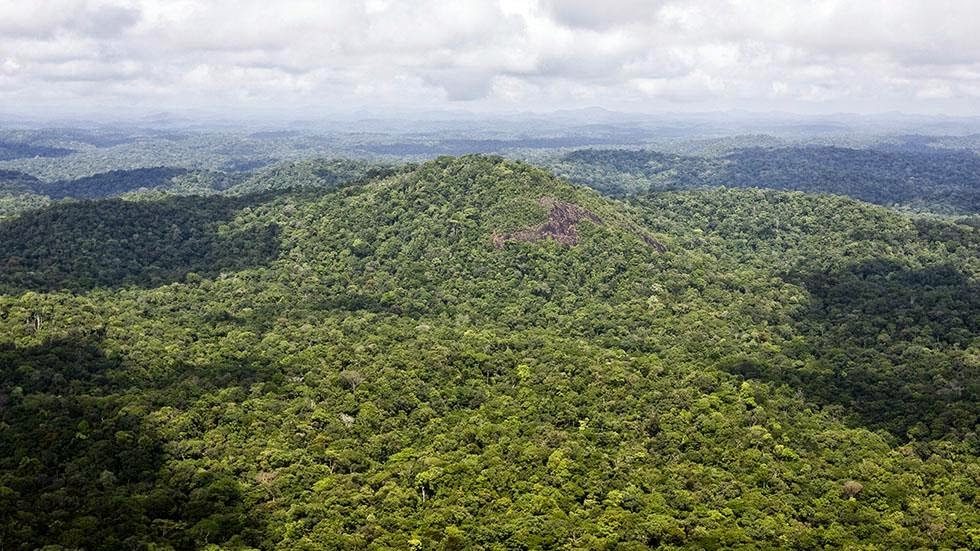
A quarter-century's worth of NASA satellite images show that rainforests are destroyed at a higher rate than previously thought.
Researchers with the University of Maryland analyzed over 5,000 images from NASA's Landsat programdating back to 1990 to gauge the true scale of global deforestation.
From 1990 to 2010, the rate of deforestation rose by 62 percent from 15,000 square miles per year to 25,000 square miles per year.
Previously the United Nations reported that deforestation had slowed down by as much as 25 percent since 1990. The U.N. study, however, was based on ground-level surveys and lacked the breadth of the new findings.
The current rate of deforestation of 25,000 square miles per year is the equivalent of cutting down rainforests the size of West Virginia annually.
Geographer and lead author Do-Hyung Kim said the analysis spanned 34 forested countries that make up 80 percent of the world's forested tropical lands.
“Several satellite-based local and regional studies have been made for changing rates of deforestation [during] the 1990s and 2000s, but our study is the first pan-tropical scale analysis,” Kim said in a release.
The immediate effect of rainforest destruction on local habitats is clear, but a less obvious issue is the impact on climate change.
NASA points out that deforestation disrupts global rainfall patterns and increases carbon emissions.
"Every American, whether they know it or not, has been affected by climate change," Edward Maibach, the director of George Mason University's Center for Climate Change Communication, told weather.com.
One of the most prominent ways it is already impacting the U.S. is through health. But most Americans have no concept of the complex intersection between their health and the environment, a report, "Public Perceptions of the Health Consequences of Global Warming," published in October 2014, indicated.
The report was compiled based on surveys from Dr. Maibach and his team, along with the Yale Project for Climate Change Communication. The organizations have been periodically surveying Americans on their beliefs surrounding climate change since 2008.
In the report, 6 in 10 people said they'd given climate change and their health little or no thought.
The majority of people surveyed either skipped the question asking which health problems are related to climate, or said they didn't know. One in four (27 percent) named at least one health problem related to global warming, and 10 percent answered — wrongly — that there are no health problems associated with it at all, the report stated.
But the climatic effects on health are varied and far-reaching. There's pollution-associated lung conditions, and illnesses, injuries and deaths stemming from extreme weather. Plus, climate change is already raising rates of vector-borne disease infections around the world. (Take chikungunya, a mosquito-carried disease that until 2014, didn't even exist in the United States.)
In the U.S., the spring pollen season is already occurring earlier due to climate change, according to the EPA. Heavy rainfall or flooding can spread water-borne diseases. Droughts can damage crop production, and in turn, the food supply. This list goes on.
Along the same vein, just 1 in 4 Americans feel they have personally experienced an effect of climate change. Interestingly, though perhaps not surprisingly, when severe weather hits a region, the individuals there then become more likely to consider climate change to be a greater threat.
"When people tell us they've personally experienced climate change, more often than not, what they're thinking about is a change in the weather in their part of the country," Dr. Maibach said. Beliefs in climate change are "almost always related to observations that they have made in their own little niche of the world."
Part of this comes from the idea that changing beliefs — and even more difficulty, behavior — is a tricky psychological challenge to our accepted worldview, Paul Stern, Ph.D., a psychologist who has researched human reactions to global changes, including climate change, for decades, told weather.com in 2013.
“When there’s a new issue to think about, in this case, climate change, people form their attitudes toward the new issue based on their underlying values,” he said.
Some people’s value systems prioritize the collective good. Others prioritize their individual lives, making action around a vague and distant threat that’s largely perceived as a merely academic debate psychologically unlikely. And some people don't act because they feel they can’t control the outcome, or the issue provokes too much anxiety, so they choose to look the other way — just temporarily, they believe, Dr. Stern said.
"The average American understands that climate change is happening. ... The average American also sees it as a distant threat in at least two different ways," Dr. Maibach said. "It's a threat that's distant to them in space, [as in] it's not happening here in my hometown. ... But even more importantly, they think of it as a problem that's distant in the future. [They think] it's not a real problem for another 50 or 100 years. As it turns out, neither of those are true."
Another problem is that many individuals and organizations believe that adjustments because of global warming will be more painful than not taking action at all. But Dr. Maibach and others firmly believe that is false.
"I'm absolutely convinced that the more quickly we can move toward clean energy, the more quickly all of us will live more healthfully — drink cleaner water and breathe cleaner air," he said.
During the winter, a breeze can make a cold day feel more uncomfortable. That’s because wind drives heat away from exposed skin faster than calm air. High winds combined with very low temperatures create dangerously cold conditions. To help people understand the risk, NOAA’s National Weather Service provides wind chill temperatures in reports of current conditions and in forecasts.
“When wind chill temperatures get into extreme ranges, exposed flesh can freeze quickly. If folks venture outdoors in these wind chill temperatures, and they are not properly bundled up, they may risk frostbite or even death,” explains Dave Kellenbenz, a meteorologist in the National Weather Service’s Grand Forks, N.D., forecast office. While dangerous wind chills occur regularly in the northern plains, they can also affect almost any region in the United States.
As temperatures drop below freezing, exposed skin is at risk of frostbite and you become more susceptible to hypothermia. The lower the wind chill temperature, the faster frostbite or hypothermia can occur. Frostbite is the freezing of skin and underlying tissues and can cause permanent damage leading to gangrene and amputation. Hypothermia is a very dangerous medical condition in which body temperature drops and death can follow.
NOAA's National Weather Servicewind chill chart and calculator shows the increasing dangers as temperature drops and wind speed increases. In cold winter months, National Weather Service weather forecast offices routinely issue two types of alerts to warn people about dangerously low wind chill temperatures.
http://www.newsweek.com/coming-us-megadroughts-will-be-worse-any-drought-seen-past-1000-years-306585 Our future is looking pretty dry. Analysis released last week from scientists at NASA, Cornell University, and Columbia University predicts that climate change will cause droughts in the Southwest and Great Plains of the U.S. that exceed any experienced in the last 1,000 years. These “megadroughts” are likely to begin between 2050 and 2099, and could each last between 10 years and several decades.Droughts of this severity would undeniably make human life harder. More severeand longer-lasting drought means less water to grow food. Perhaps most challenging would be the allocation of drinking water in the Great Plains and Southwest of the U.S., where drought will be worst, according to the researchers. Already, towns are running out of water during the current drought in the Western U.S.
Warming temperatures and reduced rainfall due to climate change mean greater evaporation of surface water. Drought-depleted reservoirs also threaten to spark a feedback loop of scarcity: Less water in reservoirs will make subsequent droughts worse. “Combined with the likelihood of a much drier future and increased demand, the loss of groundwater and higher temperatures will likely exacerbate the impacts of future droughts, presenting a major adaptation challenge for managing ecological and anthropogenic water needs in the region.”
Extreme weather events, including blizzards and snow storms, are connected to rising temperatures. Hotter air increases ocean evaporation, and a warmer atmosphere also can hold more water than a cooler atmosphere. This warmer, more moist atmosphere can intensify weather events. Larger storms in recent years are exemplifying what climate models are predicting: more powerful, with unprecedented storm surges. On winter days when the temperatures are below freezing, the snowfall may be record breaking because there is more moisture in the atmosphere. The 10 warmest years globally have all occurred in the past 15 years. Shifting air currents carry moisture away from dry areas, making parched areas prone to wildfires.
There are many impacts of climate change. To better understand them, scientists have broadly categorized them into three areas:
Erratic climate and weather extremes
Altered ecosystems and habitats
Risks to human health and society
Earth's water systems are thrown off balance. This shift in water patterns then alters habits. People and society are effected equally.
For example:
The cryosphere—the frozen water on Earth—is melting. A warmer atmosphere causes the planet's snow pack, glaciers and sea and freshwater ice to melt at an accelerated pace. Melting glaciers and polar ice sheets contribute to sea level rise. As the ice melts, it also exposes more dark ocean waters, which absorbs more sunlight than ice, and thus heats the ocean more, triggering a cycle of melting and heating.
Weather of all kinds is getting more extreme: The increased evaporation of water is like fuel for storms, exacerbating extreme weather events, such as hurricanes. Rising sea levels make coastal flooding events worse. In more naturally arid areas, droughts and wildfires intensify.
The oceans are getting hotter, expanding, and becoming more acidic: The oceans are getting hotter, because they soak up 90% of the extra heat in the atmosphere. This causes the oceans to expand, and this also contributes to higher sea levels. Meanwhile, the increased concentration of carbon dioxide in the ocean triggers a chemistry change that makes the water more acidic. The ocean is almost 40% more acidic than it used to be.
Coral and shellfish are suffering: Coral reefs are highly sensitive to small changes in ocean temperatures. The heat stresses the algae that nourish the corals and provide their vibrant colors. The algae then leave, and the corals eventually starve, an event known as bleaching. Also, a more acidic ocean affects the normal calcium balance, meaning creatures with calcified shells, such as shellfish and coral, may not have enough calcium to grow.
Forests are more prone to deadly infestations:Milder winters and longer summers allow tree-killing insects to thrive. Meanwhile, trees weakened by prolonged drought have lower defense mechanisms. This cycle of warmer weather, weak trees and thriving insects is likely the culprit behind the massive die-off of 70,000 square miles of Rocky Mountain conifers.
Our Arctic creatures need ice, but it's vanishing: As sea ice disappears, ice-dependent mammals like walruses and polar bears struggle to survive. In 2008, the polar bear became the first animal to be added to the Endangered Species Act list of threatened species because of global warming.
Climate change is a major threat to agriculture: The toll that climate change takes on agriculture is nearly incalcuable, and as a result, our food security is at risk. All over the world, farmers are struggling to keep up with shifting weather and increasingly unpredictable water supplies. Farmers also must contend with unexpected attacks from weeds, diseases and pests, which affect yield.
Warmer, polluted air affects our health: A warmer atmosphere increases chemical reactions that form ground-level ozone, also known as smog. Smog is a well-known lung irritant and a major trigger of asthma attacks. Smoke from wildfires further degrade the air. Extreme summer heat will mean more deaths during heat waves, and warmer freshwater makes it easier for pathogens to grow and contaminate drinking water.
Infrastructure and transportation are at risk, too:Hot weather, flooding and other extreme weather events damage infrastructure, put heavy burdens on electrical supplies, and disrupt how we travel and commute.
https://theextinctionprotocol.wordpress.com/2015/01/08/strongest-solar-storm-in-3-months-erupts-over-poles-polar-vortex-blasts-upper-midwest/ Earlier in January of this year a geomagnetic storm erupted over the Northern Hemisphere. According to the Space Weather Prediction Center, the storm is listed as a 'G3 on the NOAA storm scale which is considered large, but not the most severe. It’s still strong enough to cause irregularities with power systems, GPS and security systems by triggering false alarms. Beyond the Earth’s atmosphere, the storm could impact spacecraft and cause orientation problems in satellites." This is the strongest magnetic storm since September of 2014.
Since the "polar-vortex" event one year ago, the combination of wind and cold air is leading to dangerous and potentially life-threatening wind chills over a large part of the Midwest. Wind chills have dipped as low as 54 degrees below zero in Grand Marais, Minnesota. "Unlike the arctic chill that ended 2014, this cold blast will bypass the West and plunge south and east, bringing below-freezing temperatures all the way to the Gulf Coast." claims the Extinction Protocol radio commentary. Basically, what this means for us is that our climate will remain unpleasantly cold.
https://theextinctionprotocol.wordpress.com/2015/01/14/what-if-every-volcano-erupted-on-the-planet-at-the-same-time/ There are 1,500 active volcanoes on earth: both on land and in the ocean. Now imagine if all of them erupted at once. Every single day, somewhere between ten and twenty volcanoes erupt on our planet. According to The Extinction Protocol, an online radio show, scientists have reported that chances of every active volcano on earth erupting at the same time are very small. However, if this were to happen, the effects of this simultaneous blast would render our planet helpless to the effects many times more powerful than a nuclear winter says Parv Sethi, a geologist at Radford University in Virginia. In a word, an environmental domino effect would be triggered and we would not be able to stop it. From an event such as this our planet would be consumed by volcanic gas and ashes.
While the explosions and outpourings of lava would be deadly to people living close by, the number of deaths would pale compared to those caused by the ensuing climate change. Sethi predicts that a thick layer of ash would blanket the Earth, completely blocking incoming sunlight. “The planet would be pitched into complete dark, and that is going to devastate photosynthesis, destroy crop yields and cause temperatures to plunge,” Sethi said. The ash would linger in the atmosphere for up to 10 years, he added.
In an article for the Hartford Courant researchers found that with climate change will come new challenges for wildlife. Finding food and shelter is becoming more difficult for some species.A U.S. Forest Service report noted that "prolonged periods of deep snow can lead to high over-winter mortality" for deer populations. One study cited by federal authorities found a 12-inch snowfall could make 97 percent of potential food "unavailable to white-tail deer" in our region. Healthy animals will normally find enough to make it through the cold months, browsing on bark and twigs to survive. Winter deaths can have beneficial effects by killing off diseased or weak deer or animals in overpopulated areas, experts say. Meanwhile, the enormous amounts of snow are greatly benefitting others who have learned to adapt to the northern climates of Connecticut.Year-round avian residents such as chickadees, blue jays, crows, and other species native to Connecticut also have highly developed winter strategies.