Showing posts with label Patrick Namazihana. Show all posts

Wednesday, June 18, 2014

Tornado watch here, injuries and severe damage in Wisconsin

Strong storms tore through the Midwest overnight, prompting a tornado watch in the Chicago area as powerful winds and at least one tornado damaged homes and an elementary school in two towns in Wisconsin and injured at least five people.
A state of emergency was declared in Platteville, Wis., about 70 miles southwest of Madison, after high winds destroyed dozens of homes and felled trees across the city, according to city manager Larry Bierke. He said five people were hurt in the storm, including one who suffered "major" injuries.

Tuesday, June 10, 2014

Germany storms: Six dead in North Rhine-Westphalia

Six people have been killed in violent storms which battered cities in western Germany overnight.
In the worst incident, three died when a tree fell on a garden shed in Duesseldorf where they had sought shelter, emergency services said.
Cyclists were also killed by falling trees in Cologne and Krefeld and a sixth person died while clearing a street in Essen.
The storms ended a heatwave that lasted throughout the Whitsun weekend holiday.

Monday, June 9, 2014

Scientists, researchers explore replanting trees to help catch pollution

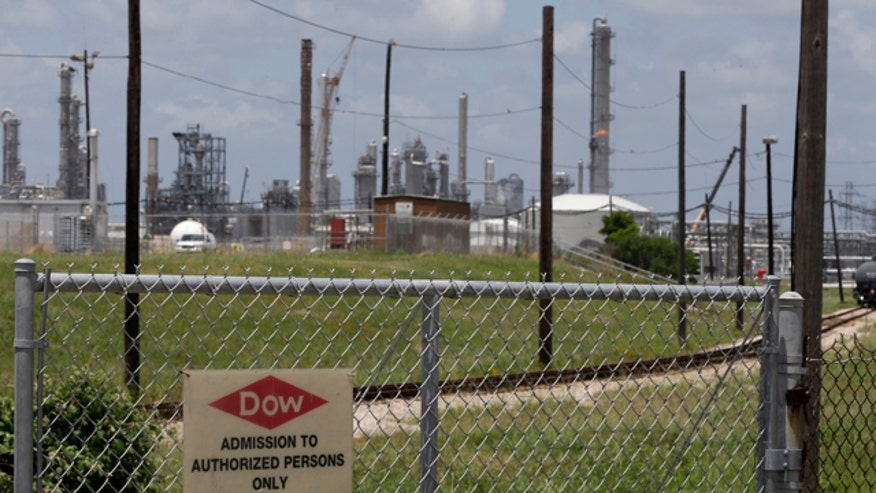
Before Houston and its suburbs were built, a dense forest naturally purified the coastal air along a stretch of the Texas Gulf Coast that grew thick with pecan, ash, live oak and hackberry trees.
It was the kind of pristine woodland that was mostly wiped out by settlers in their rush to clear land and build communities. Now one of the nation's largest chemical companies and one of its oldest conservation groups have forged an unlikely partnership that seeks to recreate some of that forest to curb pollution.

Stunning, Up-Close Storm Photos From Scientist With an Eye For the Dramatic

“Have you seen a five-inch hailstone?” asks John Allen. “Seeing a stone like that is pretty amazing. Seeing it fall? Pretty amazing. Being in Oklahoma, when there’s a Porsche dealership outside the gas station you’re hiding [in], and hearing the hailstones hit Porsches? Kinda fun.”
Allen, 27, is 6-foot-5 with reddish-brown hair and grey eyes behind rimless glasses. He leans forward, gesturing gracefully as he speaks, fingers rotating and pulling the air to illustrate his favorite subject: severe weather. It is a subject that has enthralled him since childhood, and enticed him to move from his native Australia; the United States, with its tumultuous weather, is the ideal location for severe storm research.

See Your 'World Under Water' In New Google Street View Tool

What would the world's most iconic landmarks look like under dozens or even hundreds of feet of water? Even better, what would your house look like if the oceans rose high enough to swallow it up?
If there's a photo of it on Google Street View, you can find out thanks to WorldUnderWater, a new web-based tool developed by Singapore-based CarbonStory.
A crowd-funding site devoted to raising awareness about climate change, CarbonStory provides ways for users to go "carbon neutral" by buying carbon offsets and sponsoring projects that reduce greenhouse gas emissions around the world. WorldUnderWater is its effort to visualize what sea level rise could look like if nothing is done to slow emissions of human-produced GHGs into the atmosphere.

Climate Change and Greenland: Where Ice Melt Could Raise Seas by 23 Feet (PHOTOS)


Nowhere on Earth is climate change happening faster than in the Arctic, where the island of Greenland – a colony of Denmark that's home to about 56,000 full-time residents – stands as one of the most visible symbols of the impacts that are already being felt.
Warming temperatures are making it possible to mine once-inaccessible and vast deposits of gold, uranium and diamonds, while at the same time the ice sheet that covers most of the island is melting more rapidly today than in decades.

How Much U.S. Summers Have Warmed Since 1970

June is here, so let the great debate over the Song of the Summer begin! Will this summer’s earworm come from a pop stalwart like Katy Perry or a newcomer like Iggy Azalea? Radio and Spotify listeners around the country will decide. One summer trend that’s not up for debate, though: the season has been getting hotter across the U.S. since 1970.
Nationwide, the summer warming trend averages out to a little more than 0.4°F per decade since 1970. The places warming the fastest also happen to be some of the hottest places in the country, with a large chunk of the Southwest and all of Texas warming more than 1°F per decade.


100 Percent of California Now in Highest Stages of Drought

It might not seem possible, but California's drought just got worse. According to Thursday’s release of the U.S. Drought Monitor, 100 percent of the state is now in one of the three worst stages of drought.
The latest report, which indicated that rain had improved conditions in parts of Texas and the Plains states, revealed that California got no relief. In fact, a heat wave likely worsened the impacts of the drought in the state, including the wildfires that flared up this week.

Fighting Pollution in Smog-Choked Houston With an Unlikely Weapon: Trees

Once home to expansive forests of pecan, ash, live oak and hackberry trees, this region along the Texas Gulf Coast is now a huge megalopolis of densely packed skyscrapers and sprawling suburbs, all connected by a network of smog-choked highways that today rank near the top of the most polluted in America.
Those trees that once naturally purified the coastal air coming in from the Gulf of Mexico are no more, wiped out by Houston's early settlers in a rush to clear land and build communities. Now one of the nation's largest chemical companies and one of its oldest conservation groups have forged an unlikely partnership that seeks to recreate some of that forest to curb pollution.

Who Wins, Who Loses In Obama's Proposed Carbon Emissions Limits

A few years from now the nation will begin making big changes in the ways it uses energy, and generate it from cleaner sources, if the Obama administration's proposed new limits on carbon dioxide emissions – announced at EPA headquarters in Washington Monday – are fully implemented as planned.
That means there will be winners and losers among our current mix of fossil fuel-based energy sources, of which coal is the biggest single source, providing nearly 40 percent of the power used by homes and businesses nationwide.
The proposed limits will likely help the biggest U.S. natural gas producer, Exxon Mobil, by increasing demand for its fuel, which emits half the carbon dioxide as coal. The biggest nuclear power generator, Exelon, and biggest wind farm operator, Next Era Energy, may fetch higher prices for their carbon-free power.

he Heat Is On: Oceans Are Heating Up For Hurricane Season

If you live on the Gulf Coast or Eastern Seaboard, hopefully you’re ready for Atlantic hurricane season, which started on Sunday, June 1. As the season gets underway, hurricane-friendly ocean temperatures in the Atlantic are ramping up, though they’re not quite there in all places just yet.
A new graphic from NASA’s Earth Observatory shows ocean temperatures at the end of May for the entire globe. For tropical cyclones, the broader label for hurricanes and tropical storms, to form, surface ocean waters generally need to be above 82°F, which is colored in red on the map below.


Severe Weather Forecast: Scattered Severe Storms, Flood Threat Continues

A rather potent upper-level disturbance, combining with typically warm and humid air for early June, will focus the threat of scattered severe thunderstorms the next couple of days in parts of the South.


http://www.weather.com/news/tornado-central/severe-weather-tracker-page?hootPostID=f8a3c17f9760859f9b5f95521e493092

Saturday, May 31, 2014

Live saver for the Gulf Stream? Climate changes supplies more saline waters from Indian Ocean

The Gulf Stream system is known for its impact on Europe's mild climate. For quite some time oceanographers and climate scientists worry that its strength could decline due to the climate change. Unexpected help could come from the ocean currents south of Africa: researchers of the Leibniz Institute of Marine Sciences (IFM-GEOMAR) and the University of Cape Town have discovered that the Agulhas Current transports more saline waters into the Atlantic. These could potentially contribute to stabilize the Gulf Stream system. The study will appear on 26 November in the scientific journals Nature.

http://www.sciencedaily.com/releases/2009/11/091127134037.htm

Climate change to intensify important African weather systems


Climate change could strengthen African easterly waves, which could in turn have consequences for rainfall in the Sahel region of northern Africa, formation of Atlantic hurricanes and dust transport across the Atlantic Ocean. Weather systems that bring rainstorms to many drought-prone areas of northern Africa, carry Saharan dust across the ocean and seed Atlantic hurricanes could grow stronger as a result of human-caused climate change, a new analysis by Stanford scientists suggests.
 

Noctilucent Clouds

The word almost sounds like it's from space. And indeed, noctilucent clouds are very different from their more familiar, terrestrial cousins.
If you've never heard of noctilucent clouds, don't worry, it's not just you. The clouds occur under very strict atmospheric conditions, and only during a handful of weeks in the year.

Hurricane Season 2014: 10 Myths Debunked


Let's apply some truth serum to some stubborn myths about hurricanes and tropical storms, starting with the impacts that are most likely to claim lives.
Tropical cyclones are categorized by wind speed, but it's the storm surge – the water rise generated by a hurricane or tropical storm – that is the greatest U.S. tropical cyclone killer, making up 50 percent of all tropical cyclone-related deaths.

Severe Weather Forecast: Multi-Day Severe Thunderstorm Outbreak Expected

Typical of late spring, we have been seeing clusters of thunderstorms in many states over the past several days, with localized bouts of severe weather and flash flooding.
This weekend, a more substantial threat of severe weather, including the threat of some tornadoes, will materialize over the nation's heartland, as somewhat stronger jet stream energy swings over a warm, somewhat humid air mass. Another round of organized and potentially widespread severe weather could threaten the Midwest Tuesday and Wednesday.


Hurricanes


http://environment.nationalgeographic.com/environment/natural-disasters/hurricane-profile/

Hurricanes are giant, spiraling tropical storms that can pack wind speeds of over 160 miles (257 kilometers) an hour and unleash more than 2.4 trillion gallons (9 trillion liters) of rain a day. These same tropical storms are known as cyclones in the northern Indian Ocean and Bay of Bengal, and as typhoons in the western Pacific Ocean.

Chasing Tornadoes (Tornado Alley)


http://environment.nationalgeographic.com/environment/natural-disasters/chasing-tornadoes/


Around dinner hour on June 24, 2003, the entire hamlet of Manchester, South Dakota—walls and rooftops, sheds and fences, TVs, refrigerators, and leftover casseroles—lifts from the earth and disappears into a dark, thick, half-mile-wide (0.8-kilometer-wide) tornado. The pieces whirl high in the twister's 200-mile-an-hour (321-kilometer-an-hour) winds, like so much random debris swept clean from the landscape.

The Most Destructive U.S. Hurricanes of All Time

Hurricanes have been menacing the U.S. as long as anyone can remember, but the monetary damages the storms have caused has increased in recent years, as this TIME photo collection shows. The devastation from Hurricane Sandy — later dubbed a “Superstorm” — rang in at $65 billion, leaving 72 people dead and more than 6 million homeless


http://time.com/123246/most-destructive-us-hurricanes/.