Showing posts with label Michael Fior. Show all posts

Monday, December 12, 2016

Where is this rain coming from?


Intense storms have become more frequent and longer-lasting in the Great Plains and Midwest in the last 35 years. What has fueled these storms? The temperature difference between the Southern Great Plains and the Atlantic Ocean produces winds that carry moisture from the Gulf of Mexico to the Great Plains, according to a recent study in Nature Communications.

It is important to realize and understand the change in storms from the past. This makes it easier to predict the pattern in the future. Studies show that the larger storms are harder to predict and the uncertainty has brought the surprise of these longer lasting more frequent storms. 

"These storms bring well over half of the rain received in the central U.S. in the spring and summer," said atmospheric scientist Ruby Leung, a coauthor with Feng and others at PNNL. "But almost no climate model can simulate these storms. Even though these storms are big enough for the models to capture, they are more complicated than the smaller isolated thunderstorms or the larger frontal rainstorms that models are wired to produce."

This difference in temperature creates a pressure gradient between the Rocky Mountains and the Atlantic Ocean that induces stronger winds that push moisture up from the Gulf of Mexico. The warmer and moister air converge in the Northern Great Plains, where it falls in massive storms.


Climate Change affecting Reindeer?

Image result

In northern Sweden, data from certain weather stations have shown that the snow season has been shortened by over two months in the last 30 years, which has huge effects on reindeer herding. Also, the climate sensitive human infection tularemia has ten folded over the same period and is much more common now than before. This according to a dissertation at UmeĆ„ University in Sweden.

I think it is pretty evident that climate change is here and affecting many things. Of all the things affected by climate change, the reindeer population may have been the last on my mind. But, considering that the snow season is decreasing rapidly over a 30 year span, there is no doubt that animals such as reindeer are in trouble.

"Our research shows that climate change in northern Sweden is more extensive than anticipated and that reindeer herding is very vulnerable," says Maria Furberg, doctoral student at the Department of Public Health and Clinical Medicine and the Department of Clinical Microbiology.

It is scary to think that climate change has such a huge affect on these animals. I wonder if they will ever adapt as a species, or just continue to decrease as the years go on. There are many reasons to be educated about climate change. Maybe people will open their eyes to the subject when beloved reindeer start diminishing.

https://www.sciencedaily.com/releases/2016/11/161129084235.htm

Storms/Cold Won't Stop Dakota Protesters


The massive snow storms and bitter cold weather does not stop the protesters from standing their ground against the Dakota Access pipeline. It's safe to say that people from North Dakota are used to this weather, so this shouldn't be that surprising. But, these protesters are showing a new kind of stance. I respect them standing up for what they believe in and not abandoning their cause. Even if it may risk hypothermia or frost bite.

In light of heavy snowfall and winds, some protesters retreated to a nearby casino and area shelters overnight as a blizzard blew through, but many other hunkered down at the Oceti Sakowin camp in Cannon Ball, North Dakota, according to protest organizers who say they're committed to maintaining the camp through the winter, reports the Associated Press.
The storm Monday into Wednesday brought more than half a foot of snow, wind gusts of 40 to 50 mph and temperatures that felt as cold as 17 degrees below zero, according to weather.com meteorologist Chris Dolce.

The Lake Oahe project is part of a larger four-state, $3.8 billion pipeline project that would connect the Bakken and Three Forks oil production areas in North Dakota to an existing crude oil terminal near Pakota, Illinois, according to a statement by the Army Corps. The pipeline is 30 inches in diameter and is projected to transport approximately 470,000 barrels of oil per day, with a capacity as high as 570,000 barrels.


Rain In The South Helps Drought Improvements


While the northern half of the US is dealing with snow storms, the south has different issues. The southeast has experienced a drought this year, but two waves of heavy rain helped improve the droughts in those areas. Although the news of the rain is a goo thing for these areas in the south, this doesn't mean the drought is over. 

Many areas of the South saw drought conditions improve by at least one category from western North Carolina through Tennessee and into Mississippi, Louisiana, Texas and the Florida Panhandle.
There are four drought categories on the U.S. Drought Monitor, ranging from moderate (lowest drought category) to severe, extreme and exceptional (highest category).
Parts of Georgia and Alabama also saw some improvement, but rainfall was not as heavy in many locations, which did not bring a reduction in drought categories.

The picture below shows where the droughts have been the most severe this year: 

The area outlined in black in the above map generally marks where extreme or worse drought conditions were in place at the beginning of last week. As you can see, much of that area has seen a reduction in drought conditions due to the two rounds of rain over the last 10 days.

First comes snow, then comes bitter cold.


The last few days have really shown us that winter is here. The first major snowfall of the year over the weekend, now we can expect to see bitter cold temps this week.

The picture above shows the cold temps on Monday afternoon. Majority of the US is experiencing this cold front passing through. Even the states you wouldn't really expect (AZ,NM,NV).

An arctic cold front will push through the Midwest Monday into Tuesday, eventually reaching the Eastern Seaboard by Wednesday. High pressure will then build in behind the front, allowing very cold air to infiltrate portions of the U.S. The shivering temperatures may not end there, as a reinforcing shot of arctic air could arrive over the upcoming weekend.

Meteorologist are calling this the return of our old friend Polar Vortex. We were familiar with the vortex last year and it returns right before Christmas.

The polar vortex is basically a closed circulation surrounding the polar regions in the upper atmosphere, and when it becomes weakened or elongated, a piece of it can surge farther south. The result is arctic cold reaching into parts of Canada.


Deadly Tropical Cyclone in India


While the Northern half of the US was dealing with a weekend long snow storm, India had more severe things to deal with. India officials say that Tropical Cyclone Vardah made landfall on Monday. This cyclone has killed two people so far.

In addition, at least 24 huts have been damaged and more than 8000 people were evacuated to 95 relief camps by the National Disaster Management Authority.
Vardah moved ashore just north of Chennai Monday afternoon as the equivalent of a Category 1 tropical cyclone. The U.S. Joint Typhoon Warning Center in its final advisory estimated Vardah's maximum sustained winds were 85 mph just prior to landfall.
More than 260 trees were knocked down during the gusts of winds. This took pace in India's fourth most populated city, Tamil Nadu.

The India Meteorological Department warned people of the storm serge about 3.5 feet above normal tide levels. As the storm weakened across the southwest portion of India, heavy rains stretched across those areas.

I think it is only a matter of time before more people are announced dead. It's crazy to see these things happen across the world while we have massive snowfall in the Chicago land.


White Christmas in 2016?


I think a lot of people enjoy snow on Christmas, and this year it looks like the Chicago land area will get to see it. White Christmas doesn't actually mean it has to be snowing on the day, by definition. All it means is there is at least one inch of snow on Christmas day.

Especially, with the snow storm over the weekend we should be in good shape.

A persistently cold pattern through the Christmas holiday should keep any snow from melting over a large part of the northern tier of states from parts of the Northwest, through the northern and central Plains, Upper Mississippi Valley, Great Lakes, and Northeast.

Furthermore, an active jet-stream track along that cold air should provide multiple chances of additional snowfall through the holiday.

https://www.wunderground.com/news/white-christmas-forecast-2016


Sunday, December 11, 2016

US could see extreme rain increases by end of century

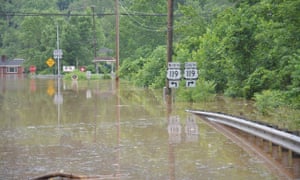
High water in Elkview, West Virginia, when the state saw rainfall of 25cm on 24 June 2016.

The study, in the journal Nature Climate Change, suggests that storms that now occur about once a season could happen five times a season by the century’s end, a 400% increase.
And when such storms do occur, they could produce up to 70% more rain. That means that an intense thunderstorm that would today drop about 5cm (2 inches) of rain would drop 9cm in the future.
Such massive amounts of rain occurring more often could put significant strain on infrastructure that already struggles to deal with heavy rainfall, as seen across the country this year in places from Louisiana to West Virginia.
Large heavy downpours have already been increasing across the northeast. This pattern will continue is a more broad area across the United States. Heavy downpours like this can cause serious infrastructure damage.
The Midwest seems to be pretty stable on the increase in heavy rains. On the outer portions on the United States is where we see the most dramatic increases by as much at 70%.  The study has proven if greenhouse emission continues on their current path. these severe storms will follow across the lower 48 states. 


Saturday, December 10, 2016

Sahara Desert was once tropical?


As little as 6,000 years ago, the vast Sahara Desert was covered in grassland that received plenty of rainfall, but shifts in the world's weather patterns abruptly transformed the vegetated region into some of the driest land on Earth. Now a researcher is trying to uncover the clues responsible for this enormous climate transformation -- and the findings could lead to better rainfall predictions worldwide.

Who would have ever thought that the Sahara Desert was covered in grassland at some point? Definitely not me. It's amazing to see the affect of weather shifts across the world. Today, the Sahara is one of the driest places on earth which is why this story is so fascinating.

 "Tropical rain belts are tied to what happens elsewhere in the world through the Hadley circulation, but it won't predict changes elsewhere directly, as the chain of events is very complex. But it is a step toward that goal."

These finding are making it easier to predict how much weather has changed in various regions of the world. These shifts in weather can be caused by many different factors and it's interesting to see where the shifts occurred and in what way. 

https://www.sciencedaily.com/releases/2016/11/161130141053.htm


Climate change the culprit for Tibet avalanche


Image result for avalanche

On July 17, more than 70 million tons of ice broke off from the Aru glacier in the mountains of western Tibet and tumbled into a valley below, taking the lives of nine nomadic yak herders living there.
To perform a kind of forensic analysis of the avalanche, researchers from the Chinese Academy of Sciences joined with two glaciologists from The Ohio State University: Lonnie Thompson, Distinguished University Professor in the School of Earth Sciences and research scientist at the Byrd Polar and Climate Research Center (BPCRC), and Ellen Mosley-Thompson, Distinguished University Professor in Geography and director of BPCRC.
The most important fact about the avalanche, said Thompson, is that it lasted only four or five minutes (according to witnesses), yet it managed to bury 3.7 square miles of the valley floor in that time. He said something -- likely melt-water at the base of the glacier -- must have lubricated the ice to speed its flow down the mountain.

Climate change is no longer something people can logically deny. There are studies and facts the fully support climate change is real and happening right now. This is another example of the dangers that come with climate change. 
When 70 million tons of ice causes a deadly avalanche, it's time to wake up and realize this is not something that can be brushed off any longer. These types of disasters cannot be predicted but researchers have determined that meltwater is the reason for this one. 
I don't know how people can still deny climate change. How many more disasters have to happen in order for people to stop thinking this is a hoax?

https://www.sciencedaily.com/releases/2016/12/161209080826.htm

Travel disruption in Central US due to weekend snow

Feature graphic hd25

It took a while for the first big snowfall of the year, but this weekend many states across the Central US will see some heavy snow. Major highway in Iowa have already been closed early Saturday morning due to heavy snow.

We should expect at least a half foot of snow by Sunday night in Chicago and surrounding areas. This could be the start of what we had expected to be a snow-heavy winter. With sub-zero temps anticipated for next week, it will be interesting to see how this snowfall plays out.


As demonstrated in areas that received heavy snow over the past few days, highway pile-ups become more likely in wintry weather. Those traveling at highway speeds should therefore be particularly weather-wary this weekend.
Anyone planning air travel through airport hubs in this region should plan for flight delays and even cancellations as snowfall intensifies into Sunday.
“Blowing snow will reduce visibility to near zero at times and drifting snow will hinder all efforts to keep city roads clear of snow,”